Te Riu o Ōrākei · Ōrākei Basin
Caring for Ōrākei Basin
Ōrākei Basin is a living tidal lake in the heart of Auckland. For more than 60 years the club has operated its flushing gates on behalf of Auckland Council, for every person and creature that uses the water.
60+
Years operating the gates
30+
Trained gate operators
27
Consented flushes a year
Lake level
Recorded every hour
since 2022
The basin
A volcanic crater, a living lagoon
The basin formed in a volcanic eruption around 120,000 years ago, and rising seas turned the crater into a saltwater lagoon about 9,000 years ago.
Since the railway embankment closed it off in the 1920s, its water has been exchanged through the gates at Meadowbank, first opened in 1929.
Ngāti Whātua Ōrākei are mana whenua of Ōrākei. Mullet, eels and shellfish were traditionally gathered here, and the basin is recognised as a geological site of national importance.
Wildlife
Who shares the water
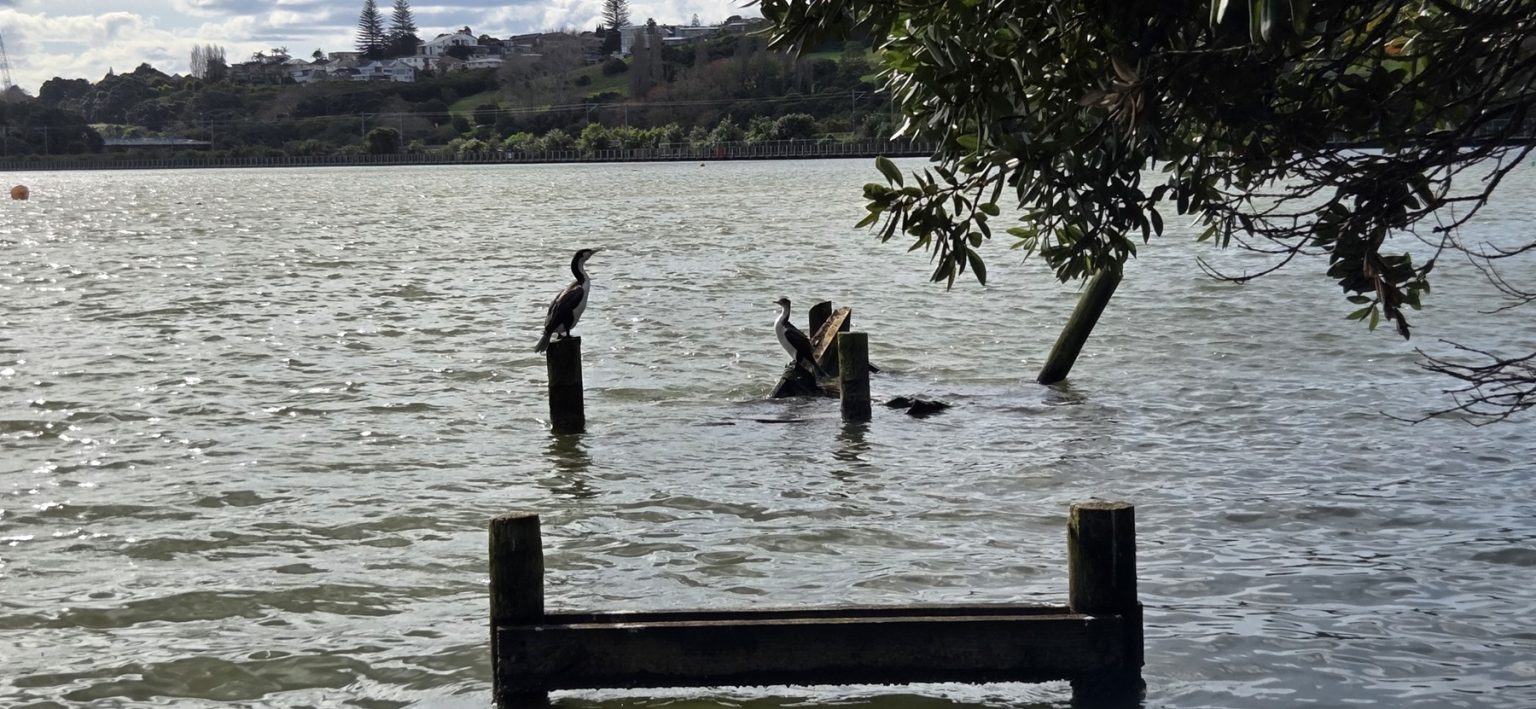
The basin supports a growing colony of kāruhiruhi, or pied shags, along with eels, shrimp and visiting sea life.
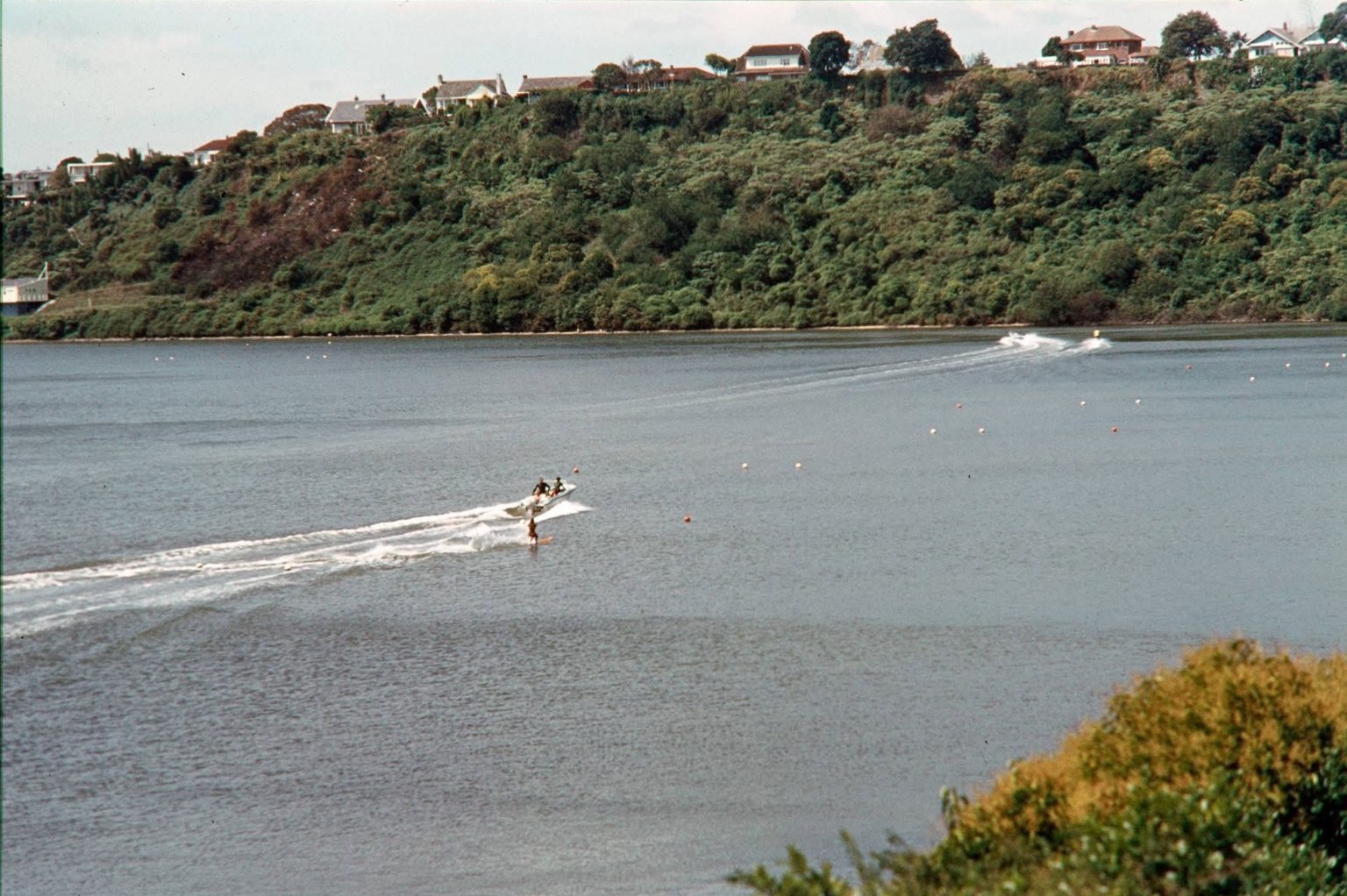
The shags are remarkably skilled hunters. They follow the ski boat around the lake, using sediment stirred up by the prop wash to hunt along the bottom, and often surface for a breath within arm's length of skiers waiting in the water.
Kāruhiruhi
Pied shags
A blossoming colony that nests around the basin and hunts its floor.
Tuna
Eels
A healthy population, often found under our ski dock and jump ramp.
Tidal visitors
Mullet & stingray
Schools move in and out with the tides, and shrimp live on the basin floor.
Outside the gates
Kingfish
Schools of kingfish are often seen in the creek just outside the gates.
Our role
An honour and a responsibility
Looking after the basin is a privilege. The club does its part on behalf of Auckland Council and Ngāti Whātua Ōrākei, for the benefit of everyone who uses the water.
AWSC has operated the flushing gates for Council for more than 60 years, at no cost to ratepayers. Our volunteers flag issues as they arise and answer callouts at short notice, usually overnight.
More than 30 members living within 5 km of the basin are trained to operate the gates, and five to ten have the experience to plan the adjustments that keep the lake at the right level.
The balancing act
Two sides of every flush
The basin is shallow and getting shallower. It was last dredged in 2000 and 2001, so a few centimetres decide whether the lake is usable, healthy and safe.
Water too high
Erosion and flooding
Banks erode, and properties up the creek fed from Waiatarua Reserve are at risk of flooding.
Water too low
Unusable and smelly
The shallow basin becomes unusable for some activities, and the smell from exposed mud increases.
On a king tide
Flooding made worse
An emergency flush timed with a king tide can make flooding around the basin worse.
Late in the tide
Creek erosion
Releasing water too late in the tide cycle causes erosion in Pourewa Creek.
What we weigh up
Every flush, every time
Resource consent requires the basin to be flushed roughly every two weeks. Getting each one right means reading all of these together.
Resource consent
About 27 flushes a year on suitable high tides, published in Council's flushing schedule.
Tide height
If the tide is too low, not enough water comes back in to refill the basin.
King tides
King tides flow back into the basin, so small amounts are released to avoid flooding.
Wind and pressure
Weather changes tide heights up the creek. Five centimetres can decide whether there is enough water, so top-ups on the next tide are common.
Flow and timing
Water keeps flowing in after high tide, so the gates often stay open for up to an hour after the peak.
The forecast
Rain and long sunny spells both move the level, so it is often adjusted two or three times a week, usually overnight.
Water quality
Flushing while local beaches carry a Safeswim warning would lock polluted water into the basin for two weeks.
Lake level monitoring
Since 2022, remote sensors have recorded the water height every hour.
People on the water
We flush overnight where possible, and our team goes out onto the lake to tell users when a flush is under way.
Lessons learned
When things go wrong
Two events in recent years show how closely the health of the basin depends on the gates.
2020
The stingrays
Ants got into the controller that runs the gates and destroyed its circuit boards, disabling the automation. It happened during the COVID-19 lockdown, and because Council did not hold the specifications for the manual override, the gates could not be switched to manual operation. Repairs were not completed until August 2020, by which time dead stingrays had been found in the basin.
2025
The jellyfish and the eels
A huge bloom of jellyfish grew from thumb-sized to larger than a dinner plate in the warm, shallow water, and eels began to die. An out-of-cycle flush pushed the jellyfish into Judges Bay, but they returned on the incoming tide, so an extended lock-out flush followed.
Some eels were lost, but a healthy population remained in the days that followed.
Find out more
Learn more about the basin
Much of the history and ecology on this page draws on the work of the Pourewa Valley community and the Friends of Ōrākei Basin, who care for the wider catchment. Thank you for sharing it.